Planning a construction project in Narok or Maasai Mara? One of the first decisions you need to make is which construction equipment to hire.
Should you hire an excavator, motor grader, bulldozer, or road roller?
The answer depends on the work you want to complete.
An excavator is mainly used for digging, a bulldozer pushes large amounts of soil, a motor grader shapes and levels surfaces, and a road roller compacts materials.
Choosing the correct machine can help reduce unnecessary hire costs, improve productivity, and make it easier to complete each stage of your project.
Whether you are building a house, preparing farmland, constructing an access road, or working on a commercial development in Narok County, this guide will help you understand which equipment is suitable for different construction tasks.
Construction machines are designed for different jobs. Although some machines can perform similar tasks, they do not always deliver the same results.
For example, a bulldozer can push and spread soil during site preparation, but a motor grader is generally better suited to precise road shaping.
Similarly, an excavator can dig deep trenches, while a wheel loader is designed primarily to collect, lift, and move loose materials.
Hiring equipment that does not match the job may lead to:
Before hiring machinery, identify the work you need completed and the conditions at your construction site.
Here is a simple guide to help you compare commonly hired construction equipment.
| Construction task | Suitable equipment |
|---|---|
| Digging building foundations | Excavator |
| Digging drainage trenches | Excavator or Backhoe |
| Clearing and pushing soil | Bulldozer |
| Grading a murram road | Motor Grader |
| Compacting road base materials | Road Roller |
| Compacting asphalt | Double Drum Roller |
| Loading gravel and ballast | Wheel Loader |
| Transporting soil and murram | Tipper Truck |
| Supplying water for roadworks | Water Bowser |
| Transporting heavy machinery | Low Loader |
The final choice depends on the project’s design, scale, ground conditions, and equipment specifications.
An excavator is one of the most useful machines for construction projects involving digging and earthmoving.
It has a hydraulic arm and bucket that can excavate soil, dig trenches, and load loose materials.
Excavators are suitable for:
Imagine you are preparing a plot for a commercial building.
The construction team needs to excavate foundations and prepare trenches for drainage.
An excavator would normally be more suitable for this work than a motor grader because the job requires digging below ground level.
However, the appropriate excavator size depends on the excavation depth, soil conditions, working space, and volume of material.
A backhoe loader combines a digging arm with a front loading bucket.
It can be useful for smaller projects that require both excavation and material loading.
A dedicated excavator is often better suited to larger or more demanding excavation work.
Choose an excavator when digging is your main task. Consider a backhoe when you need a flexible machine for smaller digging and loading jobs.
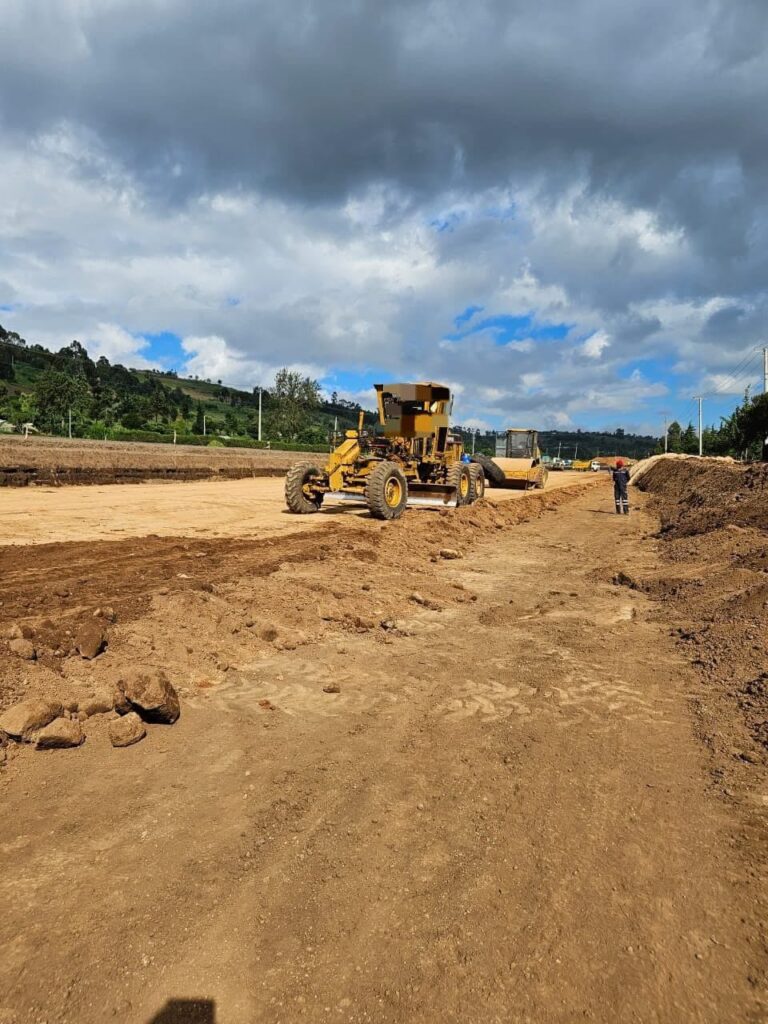
A motor grader is designed to shape, level, and finish road surfaces.
It is especially useful during murram road construction and maintenance.
The machine has a long adjustable blade that allows the operator to move material and form the required road profile.
Common applications include:
Suppose you have a farm in Narok County and want to improve an existing murram access road.
If the road already has a suitable base but needs reshaping, a motor grader may be appropriate.
The grader can redistribute loose road materials and shape the surface according to the required profile.
However, if the road has major drainage problems or unsuitable underlying material, additional work may be necessary before grading.
Not always.
A motor grader is designed for accurate leveling and surface shaping.
A bulldozer is better suited to pushing larger volumes of material during heavy earthmoving and land clearing.
For major road construction projects, both machines may be needed at different stages.
A bulldozer is designed for heavy earthmoving, pushing soil, and preparing construction sites.
Its large front blade makes it useful for moving substantial amounts of material over relatively short distances.
If you are preparing a large area of land for construction, a bulldozer may be suitable for pushing soil and carrying out rough grading.
An excavator may still be needed where deep digging is required.
A motor grader may then be used for more precise surface shaping.
This shows why larger projects sometimes require several machines working at different stages.
A road roller is used to compact soil, gravel, asphalt, and other suitable construction materials.
Compaction helps reduce air spaces in the material and achieve the density required by the project design.
Without proper compaction, road layers or construction platforms may settle or deform under traffic and other loads.
Not every roller is suitable for every material.
Often used for compacting suitable soil, murram, and road base materials.
Commonly used for compacting asphalt surfaces during tarmac road construction.
Uses rubber tyres to provide a kneading compaction action, making it useful for certain asphalt and road construction applications.
After the road material has been placed and shaped, a suitable roller may be used to compact the layer.
The contractor must follow the project specification for material thickness, moisture content, and compaction.
Important: A roller should not be selected based on size alone. Material type and required compaction are also important.
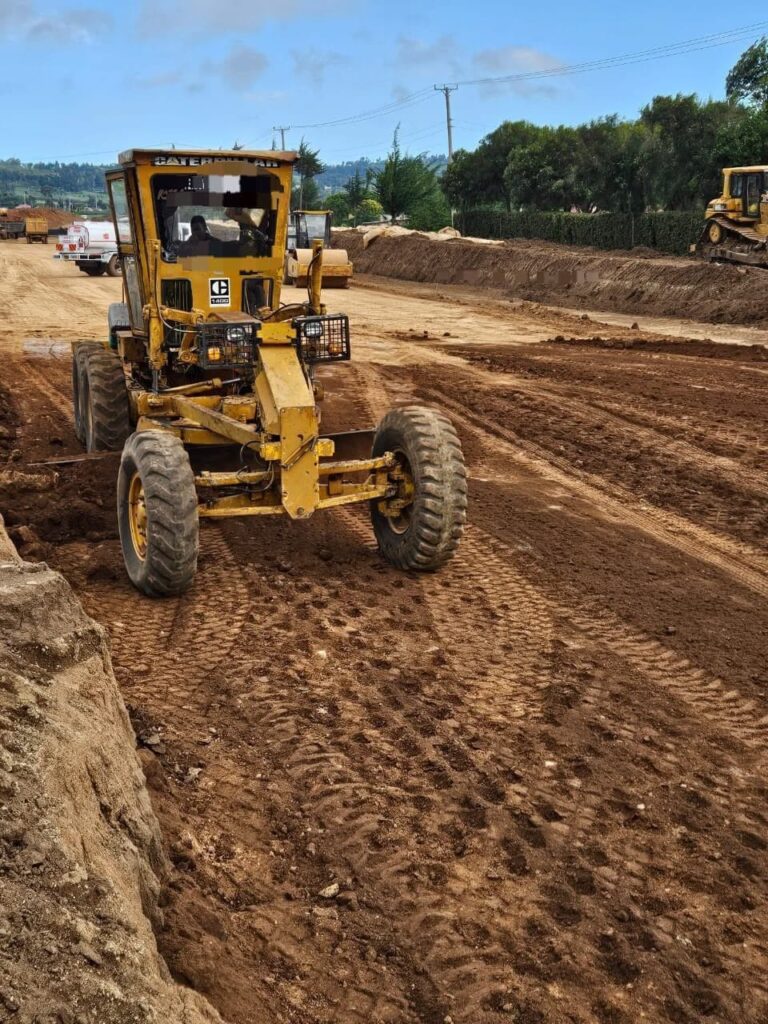
Murram roads are used for many types of access routes, including farm roads, private developments, and rural infrastructure projects.
Constructing or improving a murram road may require several different machines.
The following is an example of how equipment can be used during a typical project.
Equipment such as an excavator or bulldozer may be required to prepare the area and carry out necessary earthworks.
An excavator may be used for drainage work, while a motor grader can help shape the road formation.
Tipper trucks may be required to transport approved murram or other suitable road construction materials to the project.
A wheel loader can be useful for loading materials.
A motor grader may be used to spread the material and form the required road surface and drainage slopes.
A water bowser may be used to supply water where required.
A suitable roller is then used to compact the road layers according to the engineer’s specifications.
This is a general equipment planning example, not a complete road construction method. Actual works should follow the approved design, material test results, and applicable engineering specifications.
The cost of hiring construction equipment depends on several factors.
Knowing these factors before requesting a quotation can help you plan your project budget.
Large excavators, bulldozers, graders, and other specialized machines have different operating costs.
The machine capacity must be suitable for the work.
A project requiring machinery for one day will have different requirements from a project running for several weeks.
Ask whether the quotation is based on hours, days, shifts, or another agreed arrangement.
Heavy construction machinery may require a low loader for transport.
The distance between the equipment’s location and your construction site can affect mobilization costs.
Confirm whether fuel is included in the hire rate.
Some equipment hire arrangements require the customer to supply fuel separately.
Ask whether the hire price includes a qualified machine operator and any related allowances.
A remote or difficult-to-access construction site may require additional transport planning.
Before confirming equipment hire, provide accurate directions and details about the site access road.
Before paying for machinery hire, ask the equipment provider the following questions:
Getting clear answers helps prevent misunderstandings once the equipment reaches your construction site.
Projects around the Maasai Mara area may include property development, access road works, drainage, utility installation, and other infrastructure activities.
Equipment selection should take into account more than the type of construction work.
Can the equipment reach your site?
Large excavators, bulldozers, and other heavy machines may require specialized transport.
Check whether the access route can accommodate the transport vehicle and machinery.
Soil type, drainage, slopes, and ground stability can affect which equipment is suitable.
The project engineer or contractor should assess these conditions before major earthworks begin.
Construction activities near protected or environmentally sensitive areas may require additional permissions or restrictions.
Confirm the applicable requirements with the relevant authorities and land managers before moving machinery to the site.
Provide the equipment hire company with your exact site location, preferred start date, and working requirements.
This allows transport arrangements and equipment availability to be discussed before the project begins.
An undersized machine may take longer than expected to complete the work.
Choose equipment based on workload and technical requirements, not just the lowest daily rate.
Larger equipment is not always better.
A machine that is unnecessarily large may increase costs or be unsuitable for restricted working areas.
The daily hire price may not include delivery and collection.
Always request a quotation that clearly states the transport arrangements.
Different materials require different compaction methods.
Using an unsuitable roller can affect the finished surface.
Good grading alone will not correct every road problem.
Road drainage and ground conditions need to be considered as part of the project design.
If machinery arrives before access, materials, permits, or other preparations are complete, you may incur avoidable costs.
Make sure the site is ready for the equipment when it arrives.
An excavator is mainly used for digging and earthmoving. A motor grader is designed for shaping, leveling, and finishing road surfaces.
An excavator is commonly used for foundation excavation. The correct machine size depends on the excavation depth, ground conditions, and available working space.
Not necessarily. A bulldozer may be needed for major earthworks, but some road improvement projects can be completed using other equipment, depending on the existing ground conditions and approved design.
The appropriate roller depends on the material and compaction requirements. Double drum rollers are commonly associated with asphalt works, while other rollers may be more suitable for certain soil and granular layers.
A wheel loader is mainly used to collect, lift, and load loose materials. A tipper truck transports materials between locations and unloads them by tipping its body.
Choose the correct machine, prepare your site before delivery, confirm fuel and operator arrangements, plan the work carefully, and request a quotation that includes all applicable charges.
Choosing the right construction equipment starts with understanding the work you need to complete.
Whether you need an excavator for digging foundations, a motor grader for road preparation, a bulldozer for earthmoving, or a roller for compaction, matching the machine to the task can help you plan your project more effectively.
Beulah Works Ltd offers construction equipment hire services in Narok and Maasai Mara, including earthmoving machinery, road construction equipment, tipper trucks, wheel loaders, and other heavy equipment.
If you are planning a construction project, contact our team with your equipment requirements, project location, and expected hire dates.
Explore our Construction Equipment for Hire in Narok & Maasai Mara services or contact Beulah Works Ltd to request an equipment hire quotation.